Why does a food diary help?
Because memory is a poor record. Most people remember their meals and forget the rest: the biscuits at the office, the milk in four coffees, the oil in the pan, the second helping. A diary writes down what happened, not what you think happened.
After a week or two, patterns appear that no single day shows: the afternoon you always arrive home starving, the weekend that looks nothing like the week, the training days when you eat less than you thought. Those patterns are what a diary is for.
A diary is also something a professional can read. A nutritionist who sees two weeks of what you actually eat can help you far more than one who only hears what you remember on the day of the visit.
How do I log a meal quickly?
Logging should take seconds, not minutes, or you will stop by Thursday. These habits keep it short.
- Log straight after eating, not at the end of the day, when half of it is already forgotten
- Choose foods from your app's catalogue instead of typing in numbers yourself
- Scan the barcode on anything that comes in a packet
- Save the meals you eat again and again, such as your usual breakfast, and log them with one tap
- Photograph a plate when you are out, and fix the details later if you need to
- Round portions to what you can see: a bowl, a slice, a handful
Do I need to weigh everything?
No. For most people, a reasonable estimate logged every day is worth more than a perfect number logged now and then. Consistency beats precision: if you guess a portion the same way every time, the trend in your diary is still right.
If you have never weighed food, weighing your usual portions for a week can be useful. It trains your eye, and many people find their idea of a portion of rice or pasta was some way off. After that, go back to estimating.
Packets help when you read the right line. Labels often give values per 100 g and per portion, and the portion on the label is not always the one on your plate. Restaurant meals and dinners at a friend's house are a best guess, and that is fine: log something close and move on.
How do I keep it from taking over?
Treat the diary as information, not a verdict. A day with more than you planned is a day with more information, not a bad day, and it should not be paid back by skipping a meal tomorrow.
Some people find that calorie counting makes them anxious, or that it starts to push out the things that matter more. Watch for these signs. If you recognise them, stop logging and talk to your GP or a qualified professional. If you have a history of disordered eating, speak to one before you start.
- Feeling guilty or anxious about a number
- Avoiding meals with friends because you can't log them
- Eating less than you need to make a day look right
- Checking the diary many times a day
Who should set my targets?
Not a generic calculator, and not this guide. Online calculators give a rough figure built for an average person who doesn't exist, and they know nothing about your health, your training or your history.
A nutritionist or a dietitian can set targets for you, or tell you that you don't need any. In the UK and Ireland, dietitian is a title protected by law, while nutritionist is not, so ask a nutritionist about their qualifications and any register they belong to. See your GP first if you have a health condition, take regular medication, are pregnant, or if your weight changes without a reason you can explain.
Many people also track macros, the protein, carbohydrate and fat behind the calories. Our guide on how to track macros explains them in plain words.
How does counting calories work on Yeki?
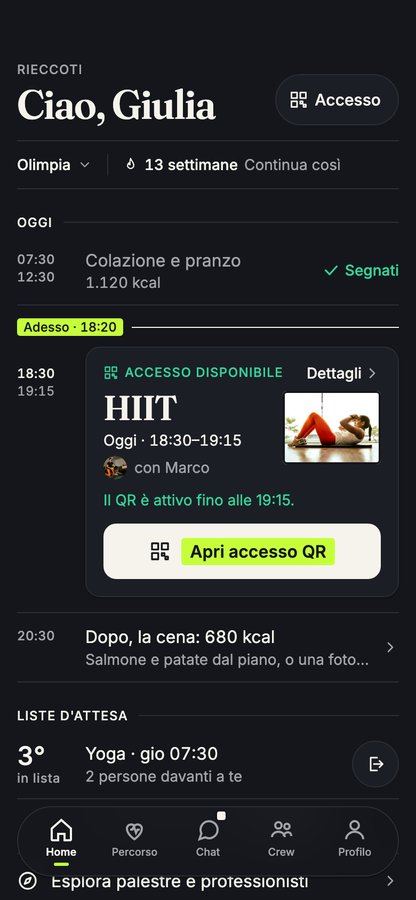
Yeki's food diary with calories is free for everyone. You choose foods from the app's catalogue, the diary adds up each meal and the whole day, and your meals sit in the timeline on your Home screen next to your next class and your workout. It is a free calorie counter app with no trial that runs out.
If a nutritionist follows you, from your gym or one you choose in the app, their meal plan arrives complete and free, with macros and the barcode scanner included, and your diary shows what was planned next to what you ate. With Plus, which also comes with Yeki Pass, you get macros, the barcode scanner, your own plan, meal templates for the meals you repeat, and meal photos.
Meal photos follow the habits above. You photograph your plate, the photo recognises the foods and the app suggests them with an estimate of the grams, shown as an estimate. You correct or confirm in two taps, and only then does the meal go into your diary. You can take up to 10 a day. The app asks for your consent before the first photo, removes the location from it and deletes it after 90 days, while the diary entry stays. Your nutritionist sees your photos only if you share them, and they are never used for ads.
And Yeki never judges a meal or writes a diet for you. Whoever advises you on food is a nutritionist. If you want one alongside a coach, online coaching with a nutritionist is coming soon, at €109.00 a month.