What are macros?
Macronutrients are the nutrients your body needs in the largest amounts, measured in grams: protein, carbohydrate and fat. Almost every food contains a mix of the three. Eggs are mostly protein and fat, bread mostly carbohydrate, nuts mostly fat with some protein.
Micronutrients, the vitamins and minerals, are needed in much smaller amounts and are not counted as macros. Fibre is a kind of carbohydrate that matters for digestion, and water matters as much as anything, even though neither is what people usually mean by tracking macros.
What does each macro do?
In plain words, and without turning any of them into a hero or a villain, this is what each one is for and where you find it.
- Protein: the building material for muscles and other tissues, and for growth and repair. Found in meat, fish, eggs, dairy, beans, lentils, tofu and, in smaller amounts, in grains and nuts
- Carbohydrate: the body's main source of energy. Found in bread, rice, pasta, potatoes, oats, fruit, vegetables, pulses and anything with sugar. Fibre belongs here too
- Fat: a dense source of energy that also provides essential fatty acids and helps the body absorb vitamins A, D and E. Found in oils, butter, nuts, seeds, avocado, oily fish and cheese
How do macros relate to calories?
Calories come from the macros. As a rule of thumb, a gram of protein or carbohydrate provides about 4 kcal and a gram of fat about 9 kcal. Alcohol provides energy as well, about 7 kcal a gram, although it is not counted as a macro.
That is why tracking macros is counting calories with more detail. Two days with the same calories can look very different underneath: one built mostly on protein and vegetables, another mostly on fat and sugar. Macros show the difference, and that is the reason people track them, often alongside their training.
If you are new to tracking, start with calories and add macros later. Our guide on how to count calories without obsessing covers the habits that make a food diary easy to keep.
How do I track macros in a food diary?
The same way you log calories, with an app that shows the grams of protein, carbohydrate and fat for each food. A few habits make the numbers more useful.
- Pick foods from the app's catalogue, so the macros come with them
- Scan barcodes on packets, and check whether the values are per 100 g or per portion
- Log raw or cooked weight consistently: rice and pasta gain weight when cooked, meat loses it
- Remember the extras: cooking oil, sauces, milk in drinks and what you drink in the evening
- Save meals you repeat, so a usual breakfast is one tap
- Look at the week as well as the day: one day off target says little, a pattern says more
Who should set my macro targets?
A professional who knows you. Online macro calculators give the same split to everyone with the same age, height and weight, and they know nothing about your health, your training or your history.
A nutritionist or a dietitian can set targets for you, change them as things move, or tell you that you don't need targets at all. In the UK and Ireland, dietitian is a title protected by law; nutritionist is not, so ask a nutritionist about their qualifications and any register they belong to. See your GP first if you have a health condition, take regular medication or are pregnant.
When a nutritionist writes your meal plan, the macros come with it: you follow the plan, log what you eat, and the comparison is done for you.
What are the common mistakes?
Most mistakes are about logging, not about nutrition. Fix these and your numbers become far more useful.
- Logging at the end of the day from memory
- Forgetting oil, butter and sauces, which are mostly fat and add up quickly
- Mixing raw and cooked weights for the same food
- Chasing an exact number every day instead of a steady pattern
- Following a split from the internet built for someone else
- Letting the numbers become a source of stress: if that happens, stop and talk to a professional
How does tracking macros work on Yeki?
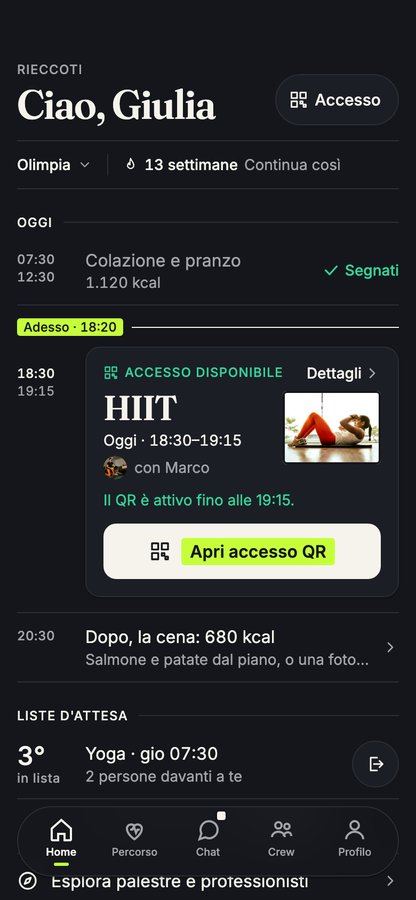
On Yeki, macros come in two ways. If a nutritionist follows you, from your gym or one you choose in the app, their meal plan arrives complete and free, with macros and the barcode scanner included. Your diary shows the planned macros next to what you ate, meal by meal, and your nutritionist reads it with you at the next check-up.
If you track on your own, macros are part of Plus, which also comes with Yeki Pass and with the app your gym publishes under its own name. Plus gives you macros for every meal and every day, the barcode scanner, your own plan, meal templates and meal photos: you photograph your plate, the app suggests the foods with an estimate of the grams, shown as an estimate, and you correct or confirm in two taps before anything enters your diary. The food diary with calories is free for everyone. It is a macro tracker app in the same place as your classes and your workouts.
Yeki never judges a meal and never generates a diet: whoever advises you on food is a nutritionist. If you want a coach and a nutritionist together, online coaching with a nutritionist is coming soon, at €109.00 a month, with a food diary with macros and meal photos included.