Can a small team offer a wellbeing benefit?
Yes, and it is often easier than in a large company. You know everyone, you can ask them directly, and a decision takes a conversation, not a committee.
The obstacle is usually the offer, not the size. Many corporate wellness providers set a minimum number of employees, a minimum term or an annual contract priced for large teams. Look for one with no minimum, so a team of five pays for five and starting small is not a problem.
Where should a small team start?
In a small team, the first people who use a benefit become the ones who tell the others. Let it spread rather than pushing it.
- Ask everyone what they do now and what they would use, in a quick chat or an anonymous form
- Pick the one benefit people asked for, not three
- Start with whoever wants it: a few people using it beats everybody ignoring it
- Set a date three months later to look at it again
Should the company pay all of it or part?
Both work. Covering the whole cost makes the benefit feel like a gift and gets the most people to try it. Covering part of it, and letting people pay the difference for a higher plan, stretches the same budget further and lets the people who train a lot get more.
Whatever you choose, say it plainly at the start, and decide what happens when someone leaves: when the company stops paying, and whether they can keep the membership in their own name.
Are discounts at a couple of nearby gyms a good start?
Often, yes. If most of your team works in one place, a discount reserved for employees at two or three gyms near the office gives people an easy reason to try, and the company is not paying a membership for anyone who doesn't go.
It suits people who would train near work anyway. For people who live far away, work from home or prefer a pool or a yoga studio, a membership valid in many places fits better, which is why many small teams combine the two.
How do team challenges work in a small team?
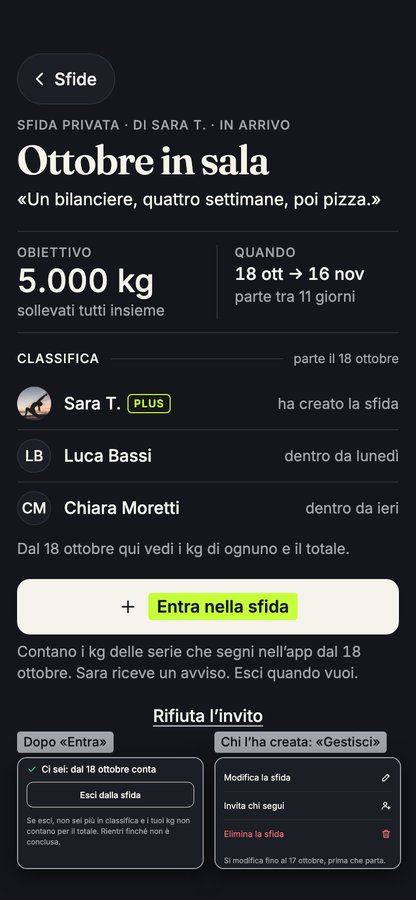
Small teams are where challenges work best: everyone knows everyone, and the leaderboard becomes a conversation at lunch. Pick a simple measure, such as workouts or minutes moved, run it for a few weeks and celebrate the effort, not just the winner.
If your team is very small, challenge another company or another office, or compete in pairs.
A challenge also works as a launch. Start it the week the benefit opens, and the first workouts happen together instead of being put off until next month.
What does it cost a small business?
It depends on the model, and the model matters more than the price on the page. In general terms, these are the options from the lightest to the heaviest.
Ask any provider whether you pay for every employee or only for the people who activate the benefit, and whether there is a minimum. Check the tax treatment of a company gym membership with your accountant before you announce anything.
- Discounts at gyms near the office: employees pay the discounted price, the company pays little or nothing
- Paying part of a membership: a set share for each person who uses it
- Paying the whole membership: the full price for each person who uses it
- Per-head pricing: a price for everyone on the payroll, used or not, the model to avoid with a small team
How does Yeki work for a small team?
Yeki Pass, our corporate gym membership, has no minimum number of people: it works for a small studio as well as for a company with several offices. The company decides how much to cover, the whole plan or part of it, and pays one charge a month only for the people who have activated the Pass. Everyone gets an invite, downloads the app and picks their plan and places among gyms, studios, pools and sports centres, and you add or remove people in a minute.
If you would rather start with a couple of gyms near the office, Yeki sets up discounts for your employees at the gyms you choose. Plus comes with the Pass, with workout plans and progress in the app, team challenges between colleagues with a leaderboard, and partner discounts on physiotherapists, nutritionists, events and shops.
The company sees only aggregate numbers, never who, where or when, which matters even more in a team where everyone knows each other. Along with the proposal, we send you guidance on how the Pass is treated in your country.